
Access All Anime: Spring 2026
Spring’s best anime included bold speculative history, spellbinding fantasy, and an unexpected favorite focusing on an underrated Japanese performance art.

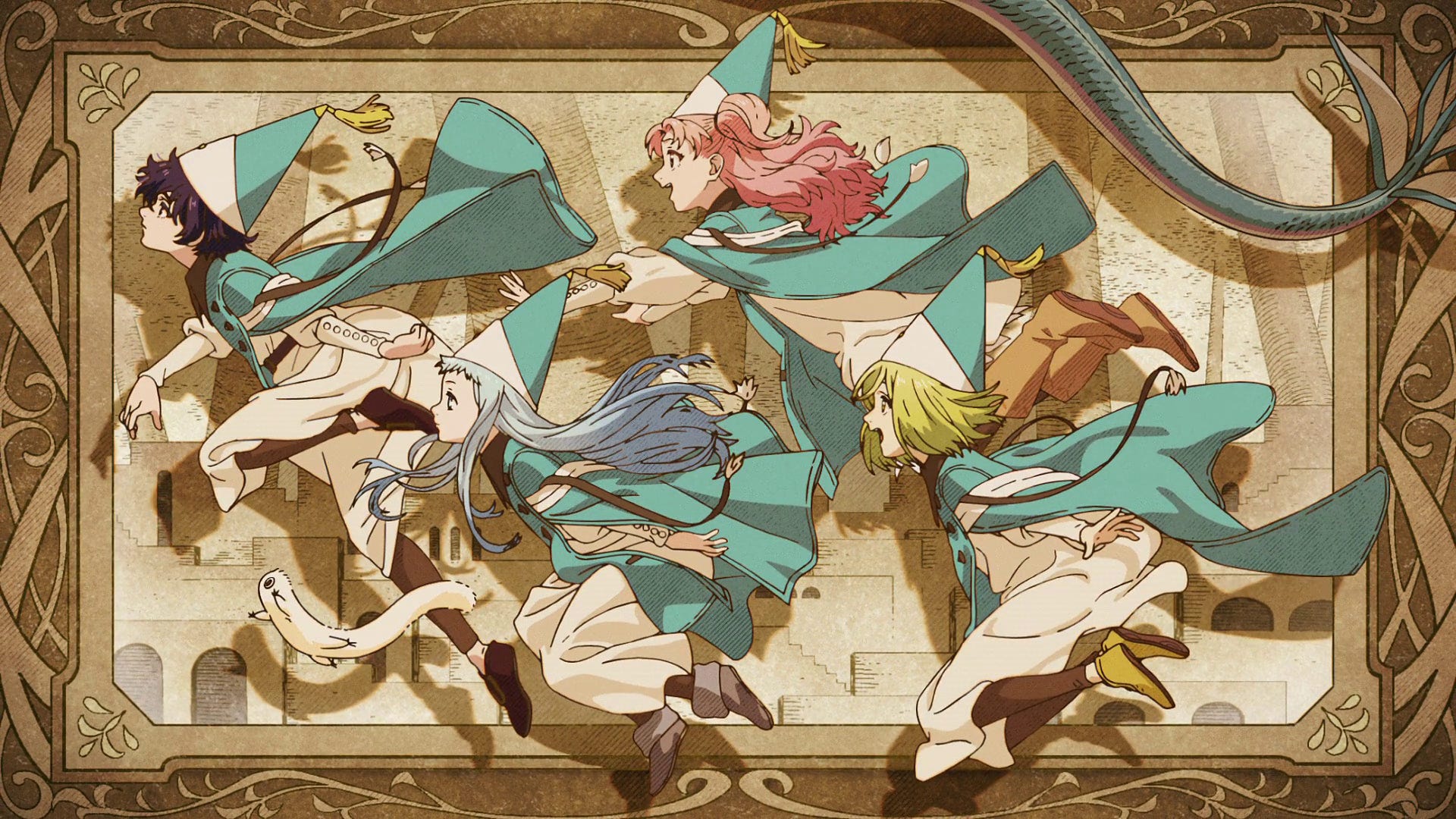
Spring is a time of new beginnings, and the best anime of the season each offered something that felt fresh and exciting, from boldly-animated alternate-histories to shows about conjuring magic through artistry onstage and off. Despite a few duds (and at least one big movie I didn’t get to check out)1, the past 12 weeks brought a wealth of interesting animation ahead of what’s bound to be a busy summer season. Here are the most noteworthy anime of Spring 2026
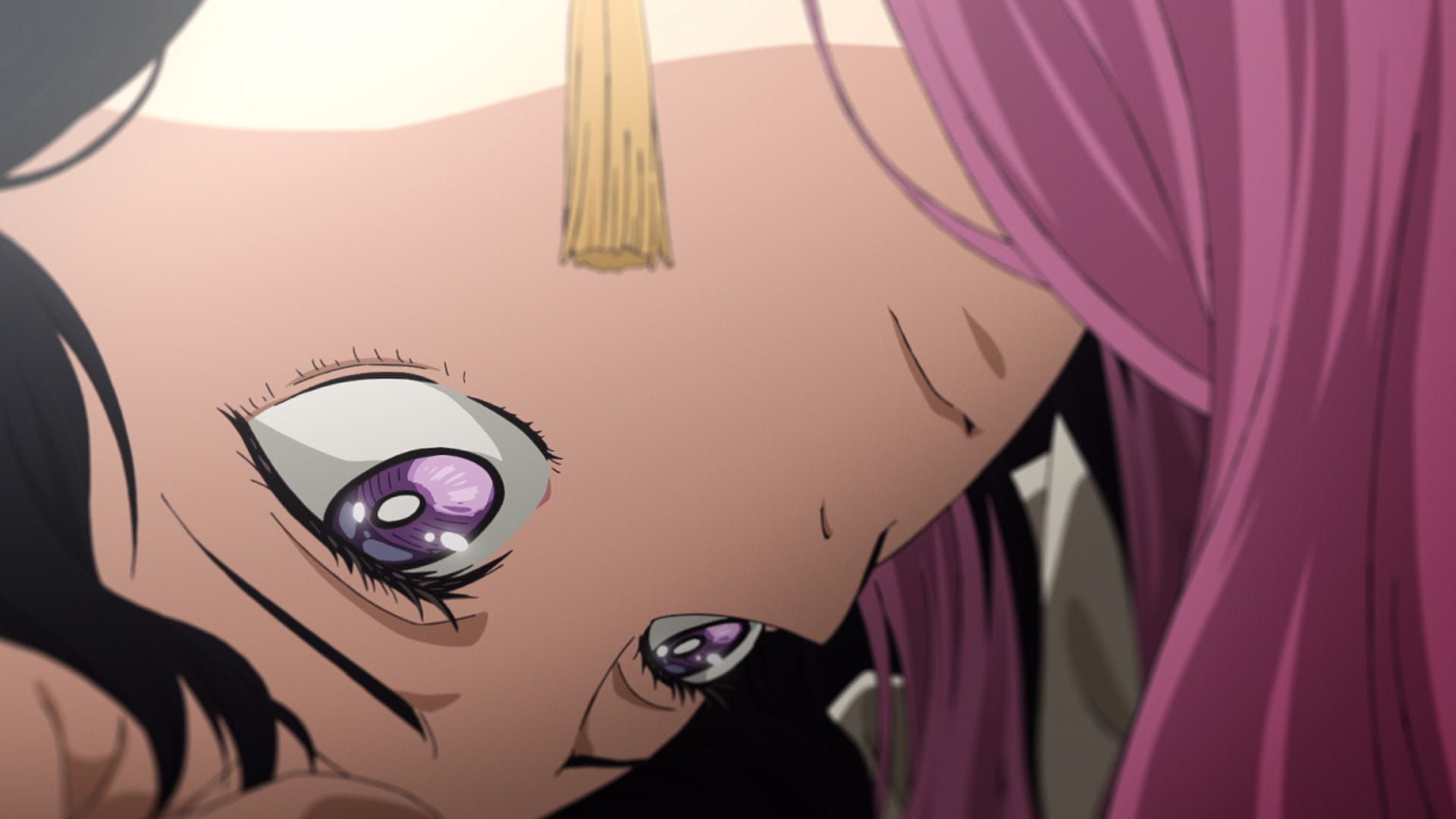
Best of the Season: Akane-banashi
あかね噺 | Production: Studio Zexcs | YouTube/Netflix
“Immersion” is an overused word when it comes to storytelling, but when a performer is truly skilled at plunging us into their craft – painting a picture with nothing but words – it feels like a transformation is taking place. I often think of Bibi Andersson’s famous monologue in Ingmar Bergman’s Persona, where her character confesses to an adulterous seaside affair that resulted in an aborted pregnancy. The first time I watched that scene, I felt as if I was actually on the beach, watching the rendezvous unfold as she described it.
The tenth episode of Akane-banashi, this season’s fascinating anime dive into the Japanese performance art of rakugo, is all about this very phenomenon. Akane (Anna Nagase) has been tasked with winning an amateur rakugo competition with a coveted prize: The winner gets an audience with Issho Arakawa (Akio Ootsuka), the man who destroyed her father’s career as a rakugoka years earlier. The only obstacle: Her master has challenged her to win with “Jugemu,” a routine as familiar and overdone as “Who’s On First” is in American comedy. But such is her skill as a storyteller, honed from years of secret formal training and pure passion inherited from her father, that she manages to turn the staid story into a brilliant, engrossing piece of theater that captivates the apprehensive audience. The animation signals this immersion: The Edo-period setting gradually takes the place of the stage, the faces of the characters subbing in for Akane herself. And the unexpected twist she applies to the story is the cherry on top. As a result, she doesn’t just win – she’s clearly in another league entirely, as Issho himself tells her: “You know you’re not supposed to be here, right?”
Rakugo is perhaps not the most obvious subject for an anime, although there have been attempts before. There was the cute-girls-doing-cute-things comedy Joshiraku from 2012 and the historical drama Showa Genroku Rakugo Shinjuu in 2016. Still, rakugo is far from the most visually striking of Japan’s many forms of traditional performance art. There are no brilliant costumes or elaborate staging like in noh and kabuki theater. No one is making blockbuster movies about famous rakugo performers (as far as I know).
Where Akane-banashi sets itself apart is by adopting the style and structure of a shōnen battle manga. Akane’s quest to avenge her father’s expulsion and surpass everyone in the field forms a character arc as familiar as Goku or Gon trying to become the best in their disciplines. Like any sports story there are opponents to be faced, each with a different style that functions as their weapon. We even get a tournament arc – the Karaku Cup – and the original manga by Yuuki Suenaga and Moue Takamasa is even published by Weekly Shōnen Jump.
The result is an extraordinarily gripping and watchable show that also serves as a fascinating introduction to an artform few outside of Japan are likely to know intimately. I’m ashamed to admit that I never saw rakugo as anything more than an archaic, Japan-exclusive predecessor to stand-up comedy. And yet from the show’s evidence the appeal is clear. Far from simply being a kind of humorous monologue, a rakugo set is more like a one-man play where a single actor plays all the parts. The point isn’t to be funny but to be entertaining, to captivate people with mere words and performance. The best rakugo sets in the show emphasize how skilled the storytellers are at playing people from hundreds of years in the past without any makeup or costumes and with only limited props. It’s utterly unique to Japan, yet it feels like it could be replicated anywhere with the fundamentals intact. I didn’t know what to expect from Akane-banashi, but by the show’s end, I was the one who felt transformed.
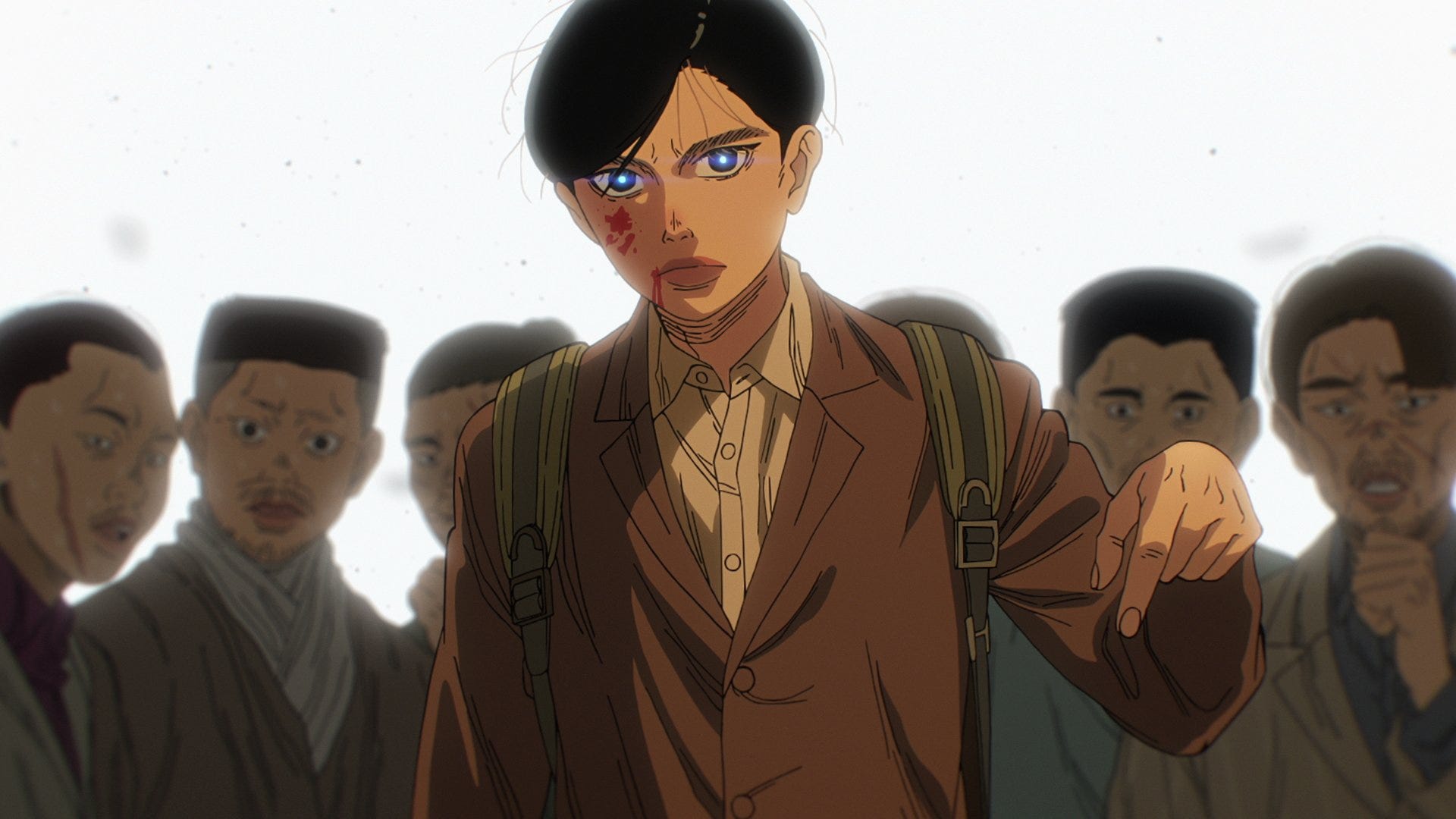
Nippon Sangoku: The Three Nations of the Crimson Sun
日本三國 | Production: Studio Kafka | Amazon Prime Video
The post World War II order has taught us to think of borders as firm and unchanging, solid boundaries rather than symbolic, invisible lines on a map. Yet even as immigration crackdowns harden and international travel restrictions tighten, making the lines more physically manifest each day, plenty of examples exist in recent history – decolonization, the collapse of the Eastern Bloc, the breakaway of South Sudan, the Russian invasion of Ukraine – should disabuse us of the notion that the lines are fixed. So it is in Nippon Sangoku, one of the best shows of this season, that a near-future Japan has split into three feuding nations – Yamato in the west, Buo in the east, and Seii to the north – after a global collapse. The pun on sengoku (“Warring States Period,” the feudal era of samurai and constant warfare) in the title seems very much intentional.2
Just as borders can come unfixed at a moment’s notice, so can lives be forever altered in a second in times of chaos and brutality. Such is the fate of Aoteru Misumi (Kensho Ono), a humble agricultural official in rural Shikoku whose chance encounter with Denki Taira (Takashi Nagasako), the cruel and powerful vizier to the puppet emperor of Yamato, ends with his newlywed wife Saki (Asami Seto) beheaded for insulting the Trumplike despot-in-waiting. Aoteru decides the best way to avenge her isn’t to kill Taira immediately but to free the nation from his clutches first and reunify Japan once and for all. He heads to Osaka, now the Yamato capital, with a plan to rise through the ranks of the imperial military, gathering allies and confronting enemies as the country goes to war against its neighbors to the north.
Based on Ikka Matsuki’s manga, Nippon Sangoku is a perfect combination of bold aesthetics and complex plotting, a deeply stylish military thriller that feels completely different to anything else in the current anime landscape. Characters quote liberally from Sun Tzu’s The Art of War and other Far Eastern classics and deploy brain-bending stratagems and schemes as they vie for power. The visuals from Studio Kafka take heavy inspiration from the comic, with heavyset kanji reactions and intertitles and stylized, bloody action sequences. Characters are drawn realistically with detailed facial features that abandon any cartoonishness, an approach that flourished in the ‘90s thanks to Akira and Mamoru Oshii’s films but feels very rare today.
All of this sets the show apart, but so does the post-apocalyptic setting, one of the most unique and creatively devised takes on the genre I’ve seen in some time. Downstream from a global nuclear war that spared the country but left it in tatters economically, Nippon Sangoku’s divided Japan takes on neither the shell-shocked grimness of nuclear horror films like Threads or Cormac McCarthy’s The Road nor the fantastical aspects of something like Nausicaa of the Valley of the Wind. This is still Japan, except the power plants stopped working long ago, the trains no longer run, and the only way to get around is via literal horsepower. Survival is the priority, and not just from swords and arrows: Aoteru’s rise is buoyed by a successful plan to increase the food supply, no small task in a world defined by nuclear winter. Abandoned skyscrapers and decaying towers – Osaka’s famed Tsutenkaku serves as headquarters for one faction – serve as constant reminders of a more prosperous past, like Roman viaducts left to rot. Culture is mixed up, pulling bits and pieces from previous eras: Aoteru’s wife wears a western “uedingu doresu”,3 geishas styled as Reiwa-era J-Pop idols entertain military dignitaries, and a crucial battle is won with scrapped cars. Yet still, the traditional, romanticized aspects of Japanese culture persist: Castles, samurai valor, the tea ceremony. The more things change, the more they stay the same.
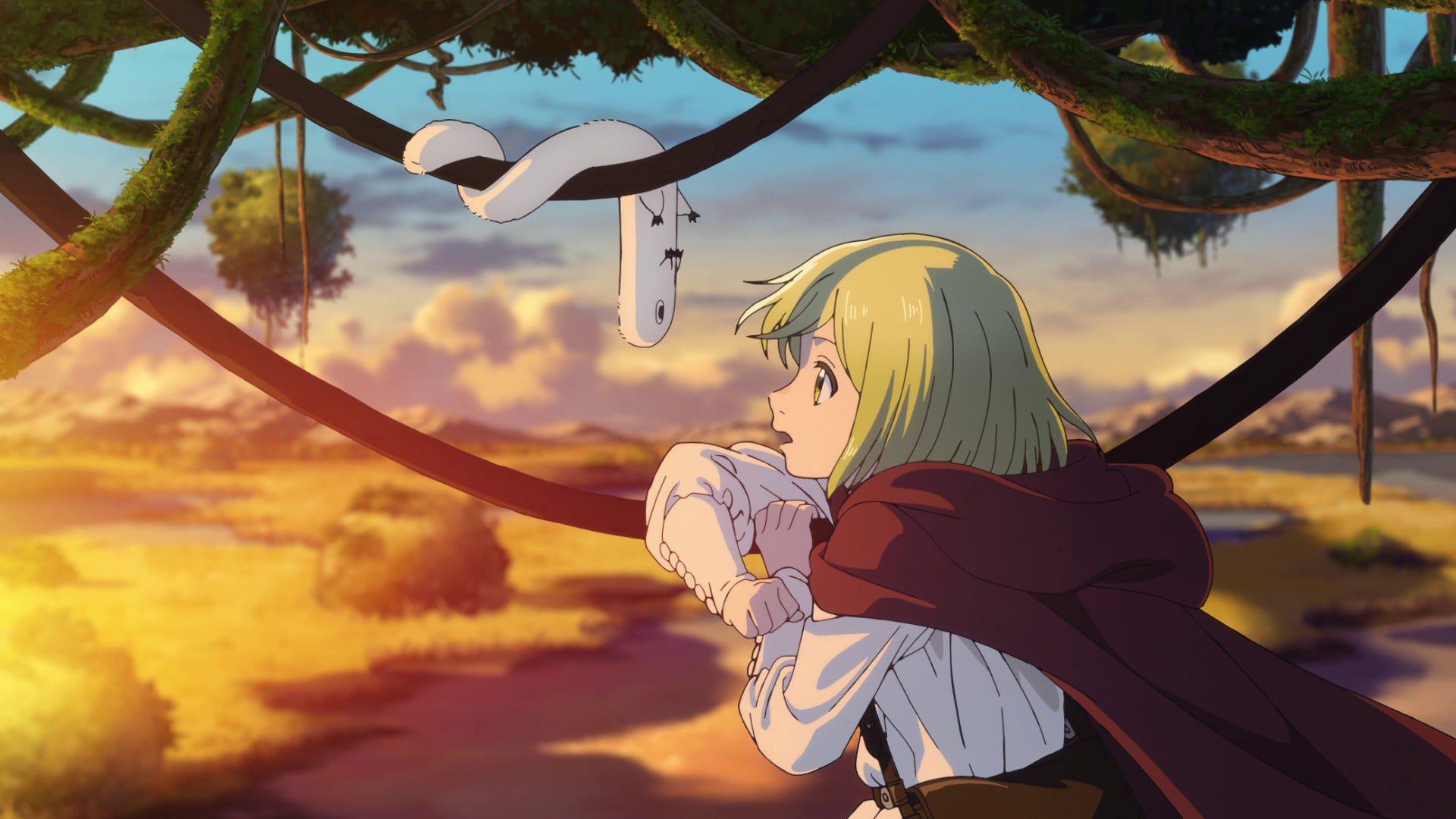
Witch Hat Atelier
とんがり帽子のアテリエ / Tongari Boushi no Atelier | Production: BUG FILMS | Crunchyroll
There is an argument to be made that creativity is a kind of magic. The greatest artists, musicians, writers, and so on all seem to channel some inexplicable force that lets them manifest their imaginations within the real world. This is what makes Witch Hat Atelier, both the original manga by Kamome Shirahama and the excellent anime by studio BUG FILMS, such a stroke of conceptual genius: If artistry in our world seems like it runs on magic, then what about a world where artistry is responsible for creating magic itself? What if magic spells take the form of drawings, and the more intricate and finely-crafted one’s drawing is, the more powerful their spell becomes? And what if that means that anyone with the proper tools can wield magic, for better or worse?
Yes, it’s a one-to-one comparison between drawing manga and conjuring magic. And it’s a central metaphor that sends an elegant, even flattering message in support of genuine creativity, one that proves especially meaningful in the age of AI. But the show backs it up with a warning, structuring its world around the idea that while magic is a powerful tool, it’s one that can be destructive when abused. We see proof of this in the very first episode as young Coco (Rena Motomura), a lifelong admirer of magic working in her mother’s fabric shop, accidentally learns the secret of casting magic by spying on local warlock Qifrey (Natsuki Hanae). Magic, as it turns out, is closely guarded and dominated by a set of strict edicts – no drawing spells in the presence of non-magic-users, no modification of the human body, etc. – so as to prevent mishaps, with violators suffering memory loss. Alas, Coco doesn’t know this and accidentally unleashes a spell that destroys her life. Yet while Qifrey takes pity on her, making her his latest apprentice alongside three other girls with disparate personalities, it’s not totally out of charity: The forbidden spell that she cast is a lead in the wizard’s search for the Brimmed Caps, renegade witches that Qifrey has been chasing for reasons as yet unknown.
Something the show does particularly well is explore the varying motivations and philosophies of its magical cast, using them to further discuss the many forms that artistry can take. Chastised by her fellow students as a neophyte, Coco learns to use her unique skillset to her advantage. She utilizes her expertise as a patterncutter and her outsider thought processes to pass the challenges placed in her way. Blue-haired Richeh, meanwhile, is intensely protective of her spells and resists any attempts to influence or guide her, an obstinacy that becomes a liability in times of crisis. And Tartah, who struggles with colorblindness, learns a spell with Coco’s help that teaches him to transcend his disability.
Fittingly for a show that takes the power of artistry so seriously, BUG FILMS has adapted Shirahama’s manga in a sumptuous, detailed style influenced by Art Nouveau hat provides a feast for the eyes with each episode. Everything from Coco’s hair flowing in the wind to the adorable Brushbuddy creature looks utterly gorgeous, with fine lines and fluid animation like a fantasy picture book brought to life. The studio faced production issues on its last project, the zombie apocalypse comedy ZOM 100: Bucket List of the Dead, and their insistence on getting things right this time led to Witch Hat’s premiere being delayed at least once. The show’s outstanding production values have absolutely vindicated this decision, but the fact that the season ends on a brutal cliffhanger in a finale full of the show’s darkest and most disturbing moments yet (one scene echoes an infamous Fullmetal Alchemist plot twist) leaves a bit of a sour taste. The show will thankfully receive a second season, and while a timeline is TBD, let’s hope it doesn’t take too long – in a world that feels increasingly hostile to human creativity, we need shows like Witch Hat Atelier that remind us all of the power of artistry.
Short Cuts
Agents of the Four Seasons: Dance of Spring – Set in an alternate world where Japan’s famously distinctive seasons are summon
ed by mortal, demigod-like figures blessed (or cursed) with the power to manifest them, Wit Studio’s Agents of the Four Seasons is adapted from the light novel by Kana Akatsuki of Violet Evergarden fame. That series’ anime adaptation by Kyoto Animation is an absolutely stellar tearjerker set in a steampunk fantasy world based on early 20th-century Europe and anchored by the struggles of its main character, a former child soldier grieving over the loss of her beloved commanding officer. It sounds like a winning proposition, but Agents dives headfirst into melodrama and never lets up. The characters are always crying or screaming or throwing up about the horrible torments they’ve experienced at the hands of the authorities that govern the changing seasons and the terrorists that seek to control them. Worst of all is Hinagiku (Yuka Nukui), the formerly-kidnapped Agent of Spring who can barely form sentences after years in captivity, and her hysterical guard Sakura (Yoshino Aoyama) whose hair-trigger mood swings make her seem like a basket case. And apparently that’s only the beginning, because while I didn’t watch far enough to see it myself, one of the agents apparently gets blown up by a missile. I think James Beckett of Anime News Network put it best when he wrote that the show “needs you to know that it is a tale about Trauma with a capital-T.” Violet could get a bit maudlin, but the protagonist served as a stoic rock against which the more emotional characters could bounce off of, her own roiling emotions kept in check until the right moment. After just five episodes I couldn’t take it anymore and dropped the show. (Crunchyroll)
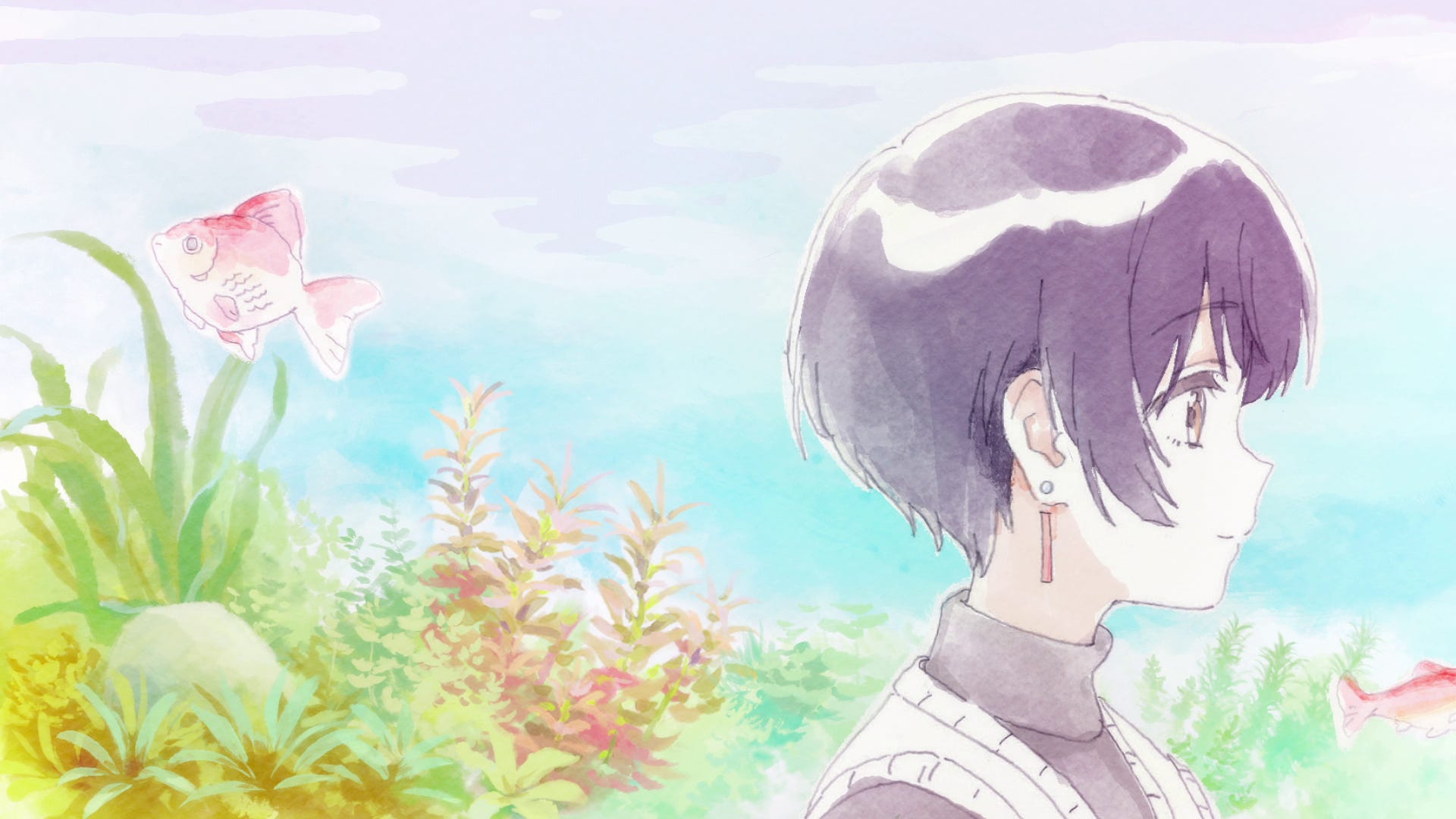
Botan Kamiina Fully Blossoms When Drunk – Call me prejudiced, but I never would have thought I’d find myself impressed by, let alone watching, a show like Botan Kamiina – Lesbians and alcohol, the jokes write themselves. But what at first glance seems like nothing more than a boozy cute-girls-doing-cute-things hangout show based on a yuri manga has proven to be one of the most pleasant surprises of the season. The show follows the titular university student Botan4 (Sayumi Suzushiro) and her housemates living in a lovely Meiji-era dorm in Chichibu5 outside of Tokyo as they get to know each other, go on outings to the city and surrounding areas, and explore the wide world of alcoholic beverages. The show feels like a particularly sapphic season of Terrace House with plenty of stylish activities at various trendy spots – a sento with a DJ setup, a clothing boutique that serves wine while you shop, art museums, hiking trips, the Daikanyama Tsutaya bookstore on every Instagram travel influencer’s list – and plenty of intriguing liquor selections from absinthe to whisky. What keeps the show from devolving into tasteful lifestyle content is its mature sensibility and the gentle drama at its core as the relationships between the girls shift and deepen. The romance is chaste and the pacing languid, with very little physical intimacy. The dorm’s RA Ibuki (Yoshino Aoyama), for instance, who harbors a complex over drinking around other people, finds herself swept off her feet by Botan, who as the title describes gets pretty flirtatious after she’s had a few and becomes Ibuki’s drinking buddy. Meanwhile grad student Kanade (Minako Kotobuki), having long nursed a crush on Ibuki, soon falls for Taiwanese exchange student Chin-lan (Maki Kawase) after the two bond over a shared love of film6. None of them are getting hot and heavy, but the sexual tension shines through nevertheless, which makes their progression feel more natural anyway. Tying it all together is the stylish direction, full of classy detail shots, cinematic edits, and intentional, artistic shifts in the animation style. Episode 11 in particular really struck me with its staging, placing the girls in empty, cavernous spaces and against voids to illustrate the indeterminate state they each find themselves in. This is only the second production for studio Soigne, which also did last year’s great photography hobbyist show Mono, and they’re proving themselves to be one of the more interesting newer players on the anime scene with Botan Kamiina. In a word, I was intoxicated. (Crunchyroll)
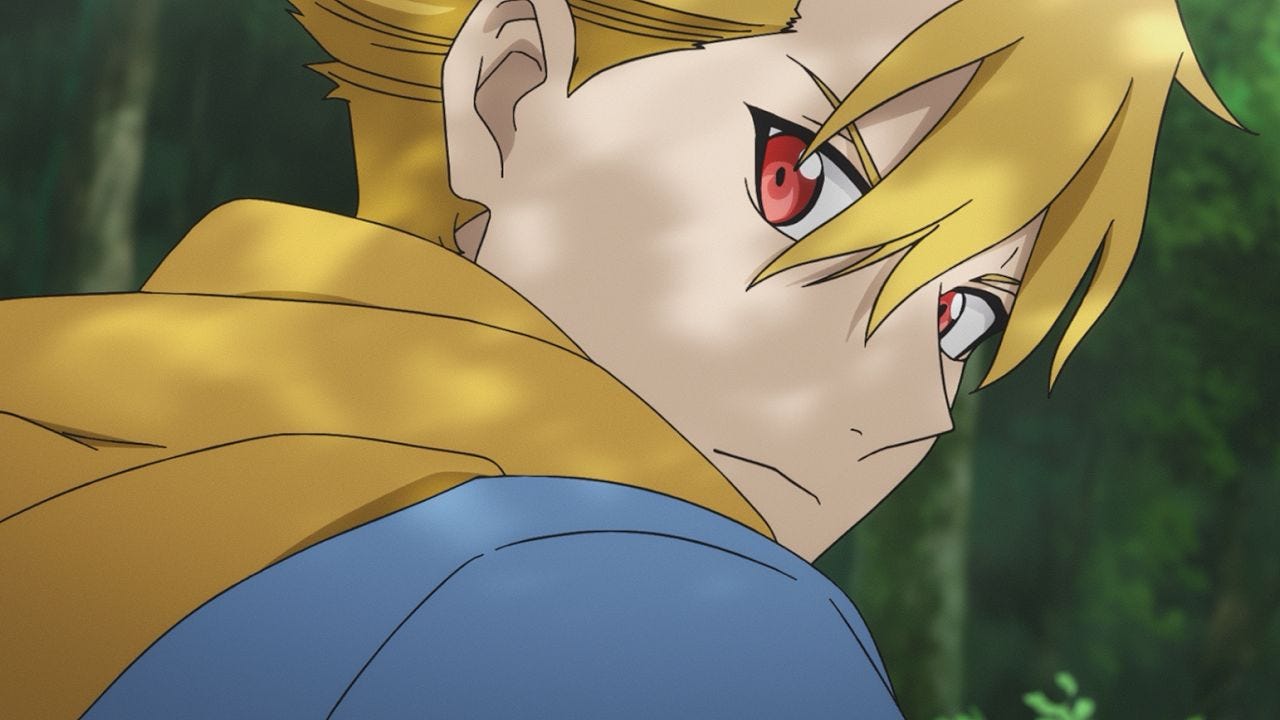
Daemons of the Shadow Realm – Any new anime reteaming Fullmetal Alchemist creator Hiromu Arakawa and studio Bones would be a must-watch, but Daemons of the Shadow Realm hasn’t really hit its stride despite an intriguing start. We follow Yuru (Kensho Ono), a young hunter living in what seems to be a feudal-era mountain village in rural Japan that suddenly comes under attack from present-day soldiers. Turns out the village is on one side of a power struggle between wielders of tsugai, or daemons, magical spirits that come in pairs and can be controlled by certain humans. Yuru is forced to escape the village with his own pair of daemons and learn the truth behind his family, his newfound powers, and the brave new world he’s suddenly thrust into. All of this sounds great, but in execution the show has been somewhat lackluster. Most episodes have felt hemmed in by an overemphasis on exposition and the fish-out-of-water element of Yuru suddenly having to navigate modern Japan. I’m not totally convinced by it yet, but I’m willing to keep up with the show as it continues in the upcoming season. (Crunchyroll)
Mao – Legendary mangaka Rumiko Takahashi is in the midst of a revival, with her two beloved works Urusei Yatsura and Ranma ½ both having earned anime remakes in the last few years. Now mega-studio Sunrise is adding a third, taking on the author’s currently-running series Mao. Frankly, the basic premise is so similar to Takahashi’s megahit Inuyasha (also animated by Sunrise) that you could accuse her of ripping herself off: A high-school girl travels back in time and meets a mysterious white-haired man with supernatural powers who helps her unlock her own hidden abilities. The details and characterizations are slightly different, however. We’re in the Taisho era this time instead of the Sengoku, the onmyoji sorcerer Mao (Yuuki Kaji) is much more stony than impetuous half-demon Inuyasha, and lead character Nanoka (Natsumi Kawada) is a bit more submissive than Inuyasha’s Kagome. Overall it’s a weaker proposition than Takahashi’s past hits, but the setting and its engagement with Japanese history and mythology have kept me engaged. The show continues into the summer. (Hulu)
Marriagetoxin / Kill Blue – Super-powered assassins have become something of a trend in shōnen with series like Sakamoto Days, and now in this season we have two examples, both with amusingly ridiculous premises. Kill Blue features a middle aged killing machine, Juzo Ogami (Yuuko Sanpei), who’s suddenly aged down to adolescence. Forced to go undercover in a prestigious middle school, he starts a fake romance with pharmaceutical heiress classmate Noren Mitsuoka (Fuuka Izumi), whose connections may hold the key to changing him back. The only problem? He likes studying so much he may just take the scenic route back to his 40s. Marriagetoxin meanwhile follows Hikaru Gero (Haruki Ishiya), the listless heir to a family of poison masters, who must suddenly begin looking for a bride in order to save his lesbian sister from getting married off to a man herself. He recruits Mei Kinosaki (Shion Wakayama), a notorious scammer and seductress who is also a male-to-female crossdresser, to be his matchmaker (s/he’s also far and away the most attractive character on the show). Both shows quickly descend into formula, with Ogami taking on a series of cliché shōnen battler stereotypes with eyes on Noren and Gero rescuing various marriage prospects in the hopes that he finds The One. But if I had to pick a winner it would certainly be Marriagetoxin. While its premise might be something of a backdoor harem plot, it’s redeemed by Gero’s sincerity and desire to change, and the show’s more mature relationship dynamics allow for some nuanced examination of romance and its many permutations. At least Kill Blue got aespa for the theme song. (Marriagetoxin streams on Crunchyroll | Kill Blue streams on Crunchyroll and Netflix)
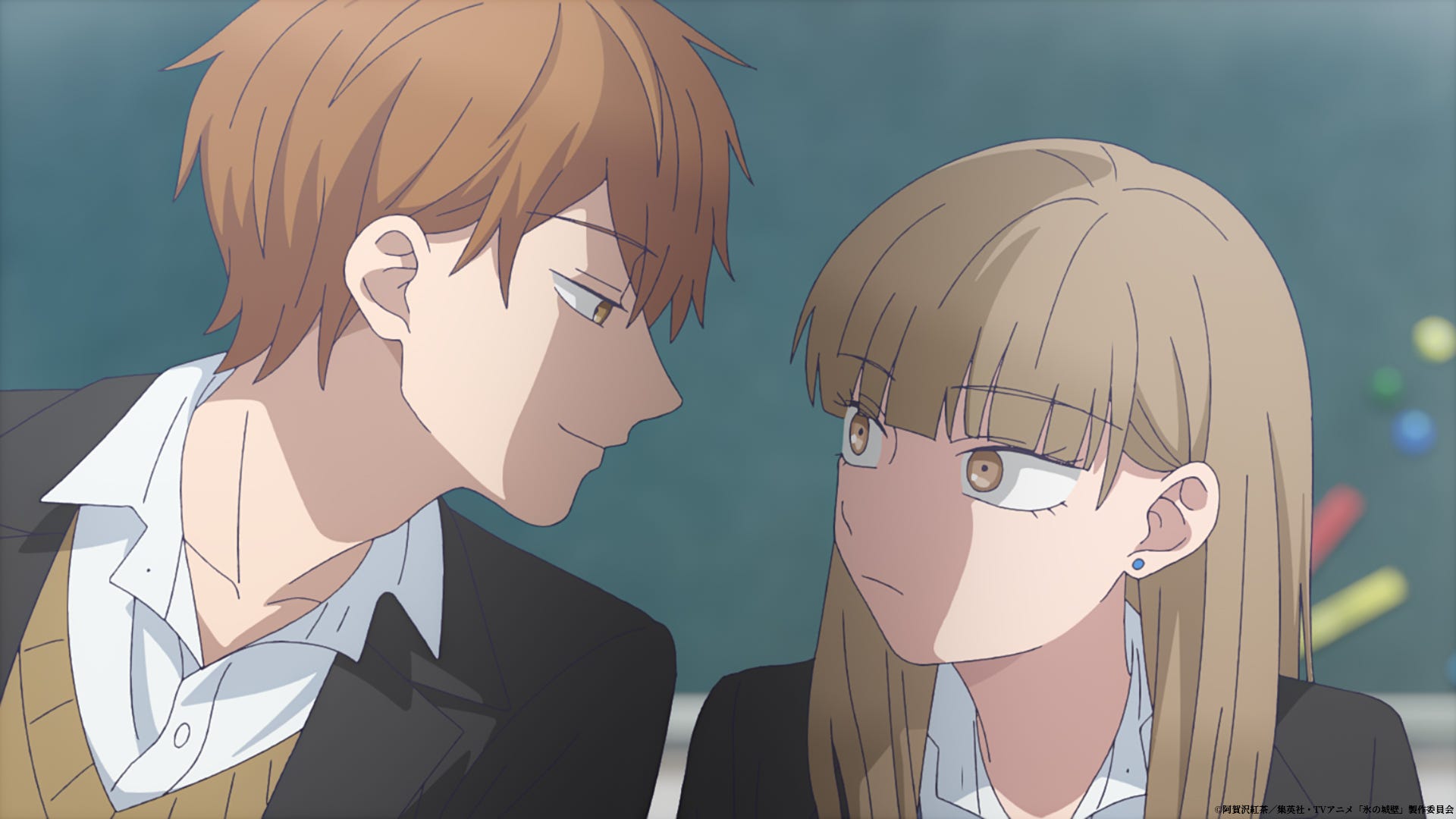
The Ramparts of Ice – It’s quite lucky for a mangaka to have even one anime adaptation of their work, but Koucha Agasawa somehow snagged two running in back-to-back seasons. First came the excellent, exuberant high school rom-com You and I are Polar Opposites, and now we have The Ramparts of Ice, also utilizing a high school setting but with a much more sedate, moody tone and conventional plot. The show follows Koyuki (Anna Nagase), a quiet and introverted freshman with a reputation for frostiness among her classmates. Though she’s resolved to spend high school quietly after a traumatic time in middle school, she soon finds herself unexpectedly drawn into an amiable clique with childhood friend and reluctant class idol Miki (Fuuka Izumi); tall, kind-hearted Youta (Satoshi Inomata); and people-pleaser Minato (Shouya Chiba). In the latter half of the season, romantic feelings inevitably arise within the group – Youta longs for Miki unrequitedly while Minato and Koyuki slowly fall for each other after initial hostility – and the foursome must figure out how to resolve their crushes while keeping friendships intact, a task that’s easier said than done. The show is slow at times and may tire those who are impatient when it comes to teens figuring out their emotions, but its calming atmosphere and patient approach to shōjo storytelling certainly has its appeal. Immense care is given to each character’s internal thought process as they reason with themselves and sort out their desires. The pacing is also excellent, with cliffhanger episode endings synced to the rollicking ending theme song from Polkadot Stingray; the show knows exactly when to slam the door shut until next week to keep the viewer wanting. With a conclusion that leaves matters unresolved for almost everyone and a second cour just announced for the fall season, Ramparts has been and will surely continue to be a satisfying chaser to its more manic sister show. (Netflix)
Want more anime? Read last season’s edition of Access All Anime here:
Access All Anime: Winter 2026

Every three months, dozens of animated TV shows hit the airwaves in Japan as well as streaming services in the U.S. Anime is bigger than ever, and there’s more of it coming out than ever before as well.
That would be Mobile Suit Gundam: Hathaway – The Sorcery of Nymph Circe, which I didn’t get to check out before it left theaters. More on that when it hits streaming.
Some commenters have also suggested a kinship with the classic Chinese novel Romance of the Three Kingdoms, but I’m not confident enough to make the comparison myself since I haven’t engaged with the epic myself.
This is the actual term in Japanese, romanized from katakana.
There’s a bit of word play in the title, “Botan” is the Japanese word for the peony flower, thus the English title of “Fully Blossoms While Drunk.” Meanwhile a more direct translation of the Japanese title would be “Her Drunken Appearance is Like A Lily,” and the Japanese word for lily is “yuri,” which of course refers to Girls Love/lesbian manga.
A small city in Saitama prefecture outside of Tokyo with lots of temples and natural beauty, popular as a day trip.
I didn’t even think to check out the show until a clip circulated of the two girls namedropping Drive My Car along with Hou Hsiao-hsien and Edward Yang. I have the utmost respect for an anime that knows movie ball.